

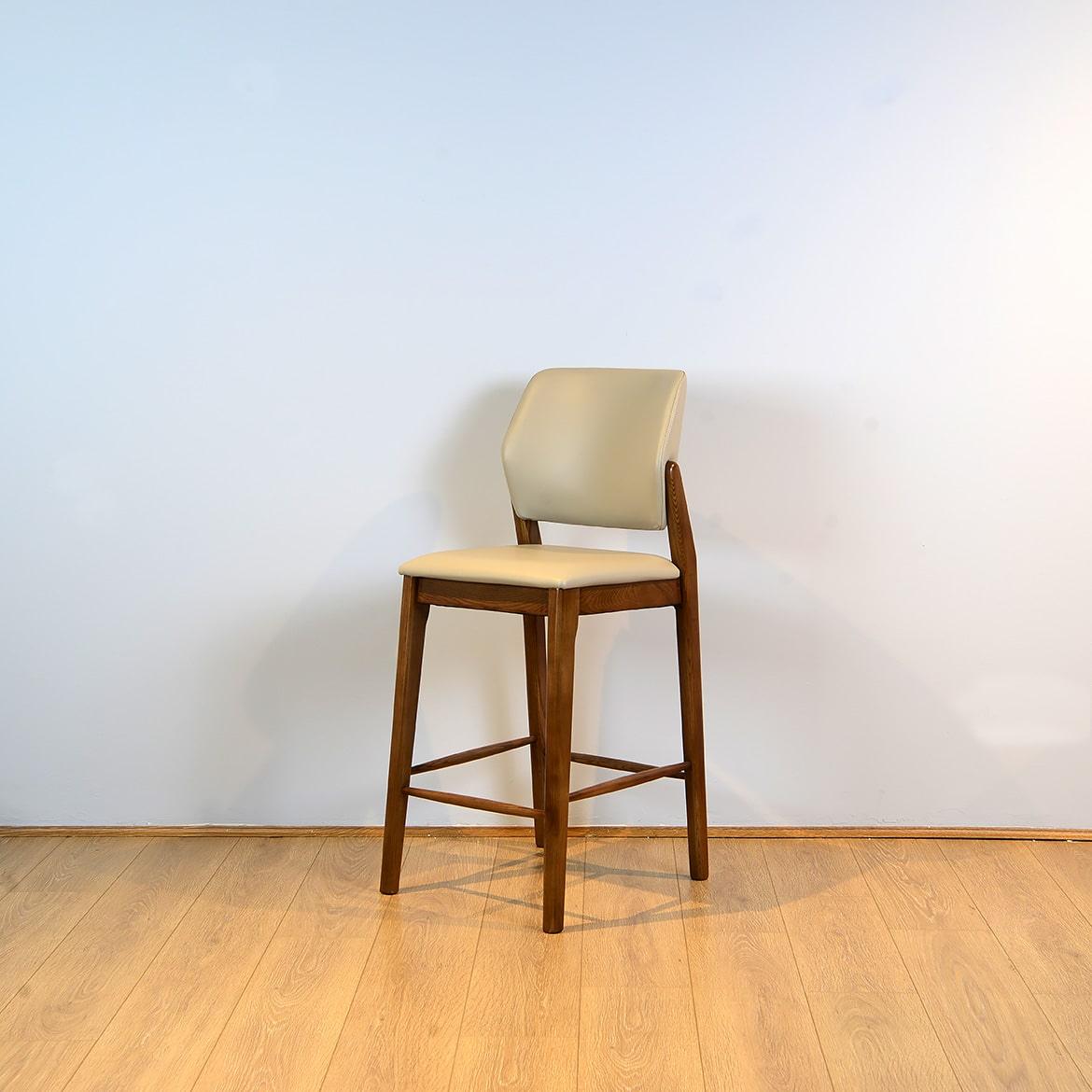
Replacing a chair range can seem straightforward until the new chairs arrive and their arms catch beneath the table. Dining chair height needs to be divided into seat height, armrest height, and overall back height before the order goes out. Each measurement answers a different question, and matching only the tallest dimension leaves the practical fit unresolved.
For a designer or purchasing team retaining the dining tables, the replacement brief should begin with what already exists. Record the accepted seating position, inspect the table’s underside, and identify why the current chairs are being replaced. That gives a supplier enough information to propose an alternative that solves the actual problem.
What should the replacement brief say?
Start by describing the current chair’s performance. Perhaps it fits the table well but is too wide for the intended seating count. Perhaps the cushion has become uncomfortable, or the arms prevent the chair from tucking away. These are different problems. Asking for something similar without identifying the issue can reproduce the same limitation in a new design.
Measure one representative chair, then check others for variation. Record the floor-to-seat dimension, the armrest’s highest point, and the back’s overall height. Note the cushion condition and the floor protectors in place. If the retained set contains different models, provide a separate entry for each rather than averaging them into one specification.
The retained table needs a corresponding record. Measure its top height and the lowest obstruction beneath it at the proposed chair positions. Include the available width between legs and any supporting structure near the feet. A replacement chair can fit the height requirement and still collide with the table base as it moves inward.
Describe the planned use in ordinary language. State whether the chair should tuck fully under the table, whether arms are preferred, and which seating positions will be used every day. A short, precise brief is more useful than a long list of style adjectives with one ambiguous height number.
Three dimensions deserve separate approval
Seat height governs the user’s position relative to the tabletop. A chair-and-table proportion guide illustrates 16 to 18 inches, about 406 to 457 mm, for typical chair seats. This refers to the seat, not overall dining chair height. Replacement dining chairs still need an occupied trial because cushioning, seat depth, and the retained table affect the fit. Record the candidate’s unloaded measurement before assessing how it feels in use.
Armrest height governs whether the chair can move under the table. Compare it with the apron or other lowest obstruction along its path, not simply with the tabletop. In a hypothetical example, a 660 mm armrest will not pass beneath a 650 mm rail, even if the tabletop is substantially higher. The backrest dimension cannot reveal that conflict.
Overall back height governs the chair’s visible profile and can affect how it sits beneath nearby architectural features. A tall back may be entirely compatible with the table while changing the room’s sightlines. Approve that visual relationship separately so that a styling preference does not obscure an unresolved seat or arm measurement.
Ask the supplier to label all three dimensions explicitly. If a listing states only width, depth, and height, the height often describes the complete chair. Do not relabel it as seat height in the purchase schedule. An unanswered question is easier to resolve before ordering than after a full set has been delivered.
Put one candidate through the complete dining sequence
Test the sample from the point at which someone approaches the table. Pull it out, sit down, move into position, and stand again. Watch for contact with legs or rails throughout the movement. A chair that fits once carefully positioned may still be awkward to use when someone enters or leaves the seat normally.
Try adjacent chairs as well. Place settings and chair arms can compete for the same lateral space. If the project uses end seats, test those independently because the table’s structure may differ there. Record any position where the candidate works only after being angled or moved away from the intended place setting.
Arms are often the detail that decides a replacement shortlist. The Isla Chair and Isla Arm Chair at Oak Furniture Collection let a buyer consider that choice within a named design family. Compare these dining room chairs using confirmed seat measurements, then add the arm height and movement path for the armchair. If the client prefers arms but the candidate cannot tuck beneath the retained table, resolve that conflict before approving the set. A shared Isla name is no basis for assuming that both variants fit identically.
For professional purchasing, also confirm that the proposed use is acceptable to the supplier. A residential furniture listing does not itself establish suitability for intensive commercial use or a particular project’s requirements. Keep any agreed use conditions with the accepted sample record rather than assuming them from appearance or price.
Close the order with the sample details intact
Identify the approved model and finish on the purchase order, and attach the relevant dimensional record. If the approval depends on a particular cushion or glide, identify that too. Photographs should show the chair beneath the table and in its occupied position, not only as an isolated product.
Ask to review substitutions before dispatch. A change in upholstery, base, or arm design can alter the fit even when the replacement is marketed as comparable. The supplier should be able to point to the accepted requirements and explain how the proposed substitute meets them.
Coordinate the replacement with the rest of the dining furniture layout. Wider chairs may reduce access to a buffet or extend into a route through the room. Repeat the occupied-layout check if the new model projects farther from the table than the original one.
At delivery, verify the model before distributing the chairs around the property. Check the first completed setting against the approved sample, including its movement under the table. A replacement project is complete when the delivered chairs solve the stated problem and fit the retained furniture in everyday use.
