

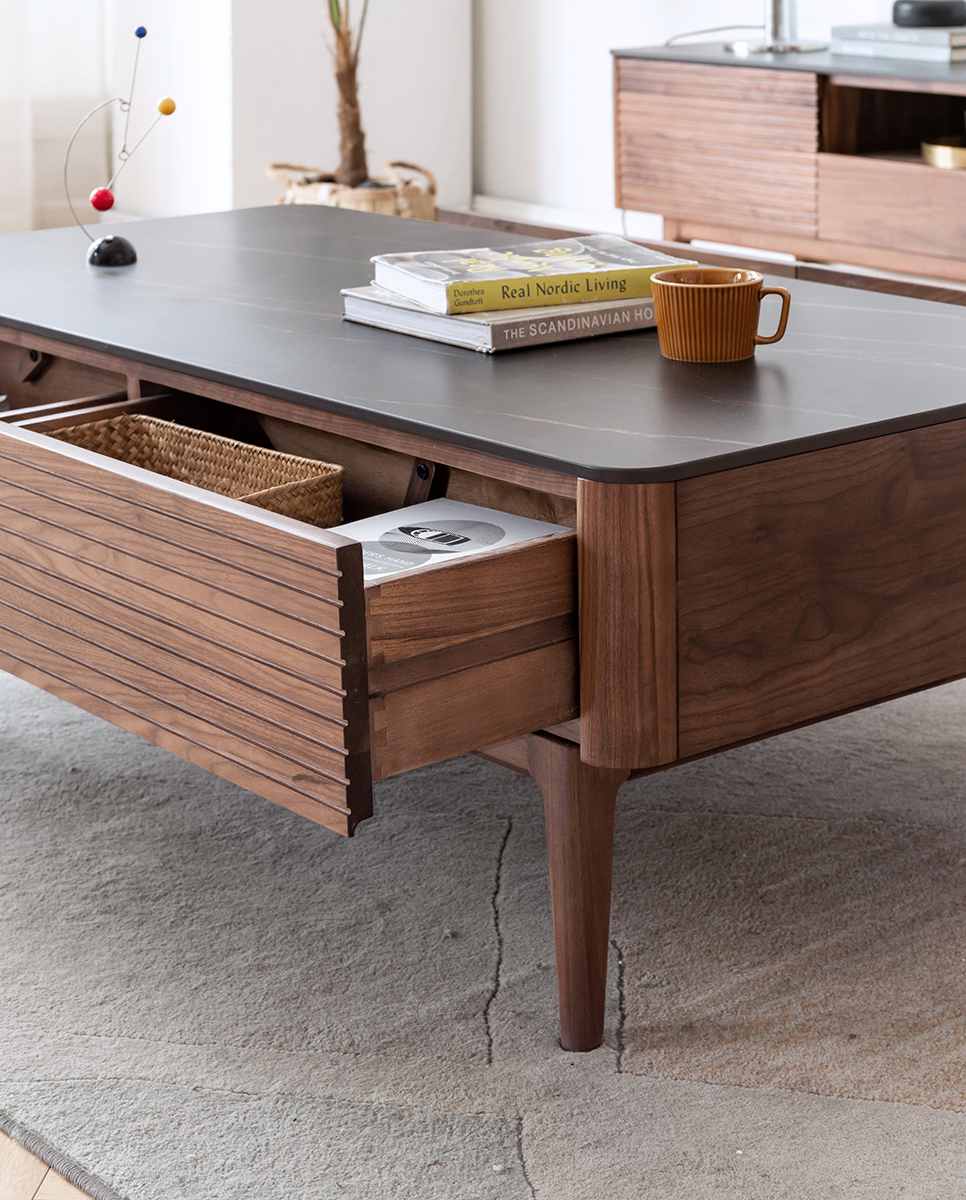
In a budget world where the expenditure is on sofas and the eye is attracted to rugs, there exists a quieter piece that performs much of the everyday work. It’s the coffee table, always catching our coffee cups, laptops, and remotes—and our conversations. This is where unique wood coffee tables prove their worth: with a blend of tactile warmth, sculptural presence, and real durability that metal, marble, or glass just often can’t match.
Design DNA: silhouette, edges, and bases that tell a story.
The thing that often separates the ordinary from the extraordinary is the silhouette, so when considering unique wood coffee tables made of wood, my first directive is to look at the outline. For bold visual impact, try an elongated coffee table—its striking silhouette commands attention.
The silhouette of a furniture design carries as much weight as in fashion—a leggy coffee table can trace lines in space like a living sketch. Chapter and verse have been written about how silhouette and proportion are key to making something look good, but it’s no less true for furniture.
Scale, proportion, and clearance that respect real life
A striking coffee table can certainly be a showpiece, but it still must perform the way a unique wood coffee tables are supposed to perform. With that in mind, let’s talk about the practicalities of height, width, and clearance for wood coffee tables. Proportion is your friend, and scale even more so, especially in the relationship of the coffee table to you and the sofa it lives with.
Aim for a wood coffee table that sits just below your sofa’s seat height—somewhere between your upper thighs and a modest 24 inches. This lower profile (compared to bulkier designs from a few years back) creates a seamless visual flow from seating to table.
As for size, balance, reach, and breathing room, keep it roughly two-thirds the length of your sofa—functional, yet unobtrusive.
Finish, sheen, and texture: the final 10% that changes everything
Finishes deserve more scrutiny than they usually get because touch is half the experience. A hard wax oil can preserve the warmth and tactility of timber while remaining repairable at home. catalyzed lacquers provide tougher spill resistance—ideal for high-traffic family spaces.
Things that read more contemporary usually offer lower reflectivity (and are thus more forgiving). That’s the matte or satin sheen, as opposed to the full-on gloss, which can reflect light (and smudges) aggressively. But there are ways to finish even the simplest things that avoid the “woodwork” look while still pushing the tactile experience in the right direction.
Sustainability, provenance, and the story behind the grain
Today’s consumers care as much about the backstory as they do about the finish, so the most compelling one-of-a-kind, unique wood coffee tables come with completely explained sourcing—whether that means refined slabs made from reclaimed beams, responsibly harvested hardwoods certified for forest stewardship, or local species that slash transport emissions. When you can trace the wood from forest to workshop, the piece transcends furniture—it becomes a testament to transparency and sustainability.
Oak or walnut—when these classics still make sense.
Should you need to mention any species at all, oak and walnut are the two you’ll hear most, and with good reason: oak offers pronounced grain, high durability, and a chameleonic ability to look coastal, Scandinavian, or industrial depending on finish, whereas walnut brings a deeper, cocoa-toned elegance that pairs beautifully with stone, leather, and blackened metal.
Choose these when you want a timeless palette and a table that ages gracefully – the kind of understated elegance that renders aesthetic debates irrelevant.
Styling that lets the table lead, not vanish
The finest styling overlooks negative space and results from curation, not clutter. At the table’s center, a low, wide, ceramic bowl can ‘ground’ the table. Add a stack of art books to introduce verticality, or something small and sculptural, like a lamp without a shade. Let objects on the table upstage a pot of grass while being upstaged by that interior design.
On second thought, that clerestory does embrace an open-plan layout. Anyway, still relevant—surfaces. Care, maintenance, and patina as a feature, not a flaw. An excellent table will collect micro-scratches, faint rings, and soft burnish where hands inevitably land.
Rather than worrying about wear and tear, plan ahead: choose repairable finishes, use coasters religiously, and wipe spills immediately to prevent deep stains. With simple care like this, even a daily-used table can stay pristine for generations.
Recommendation
If you are ready to acquire it, OAK Furniture Collection populates its domain with a selection of carefully chosen, one-of-a-kind, unique wood coffee tables that walk the line between unique artistry and very high function.
