

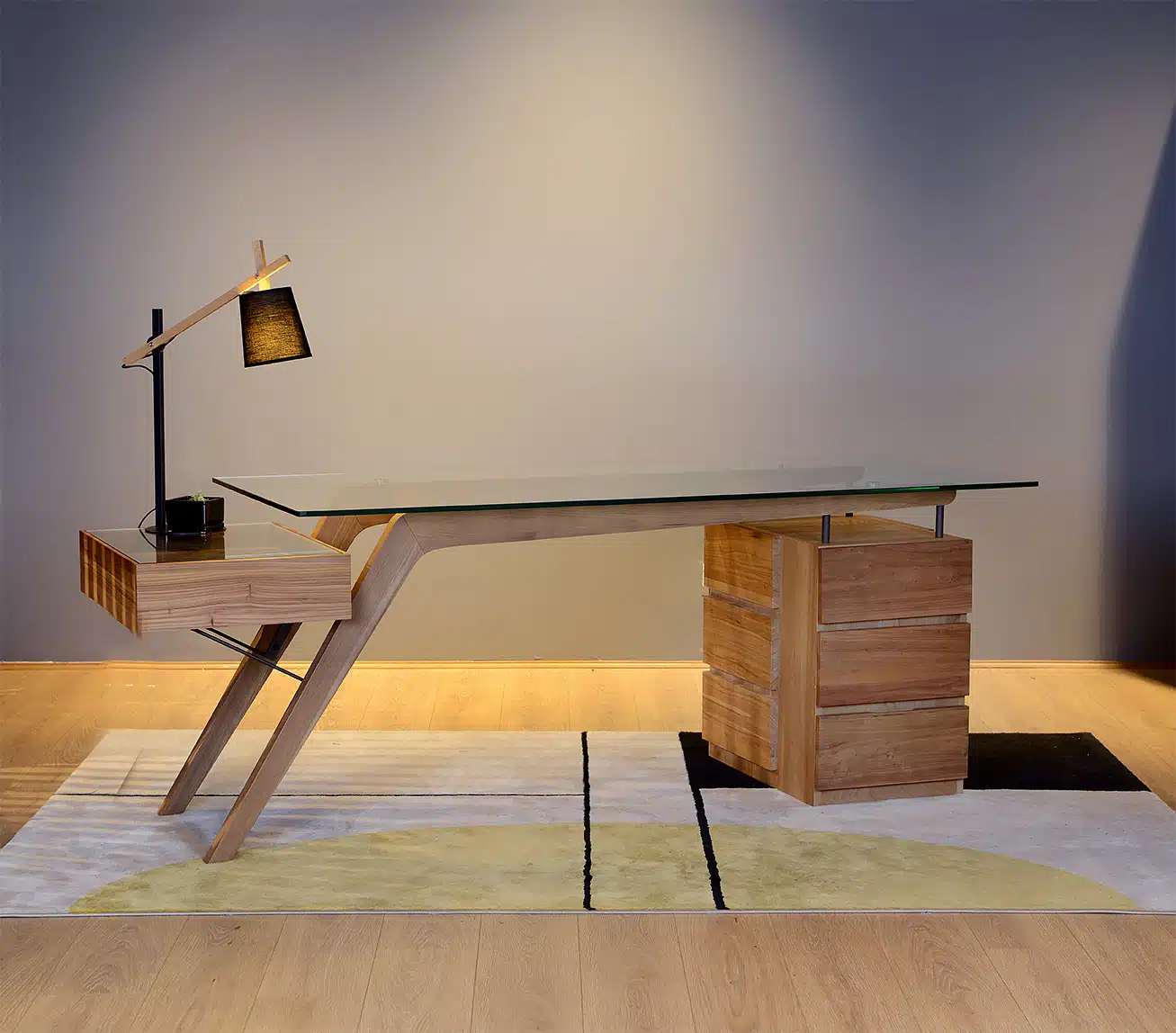
Choosing timber in your workspace furnishings is one of the most important choices that will determine the beauty and the serviceability of your workplace, since the material you are working with will directly reflect in your daily work productivity, comfort, and the general atmosphere of your own office, and wood for office desk holds prime importance. In light of the different available varieties in the market, it is imperative to know the basic traits and longevity of different types of timber, their maintenance needs, and versatility in designing that will help your investment to stand the test of time.
Knowing Timber Density and Durability
Timber density is a backbone to defining how your desk will endure the tough life of any office setting, which includes holding heavy machinery, withstanding scratches created by writing tools and electronics, as well as structural forces of having weight distributed all the time and occasionally being hit.
Generally, hardwoods offer a greater level of durability than softwoods and have a higher level of resistance to denting, scratching, and warping that is found in the high-activity professional setting, where documents, computers, monitors, and other office accessories constantly shift around the surface.
The close-grain structures of the high-quality hardwoods provide intrinsically high-performance surfaces that need minimal maintenance and perform exceptionally well over decades of constant use, and thus, it is a good choice of investment by any individual who appreciates the importance of longevity and reliability in his or her working environment.
The thick timber species are also exceptional in their stability under different environments and resist swelling and shrinking due to climate changes brought by humidity changes that normally destroy inferior timber and ruin the structures in the long run.
Moreover, the natural durability of quality hardwoods can be used to create such elegant design details as thinner edges, cantilevered areas, and minimal support structures that could not be created or were not feasible with less durable materials.
Maintenance Requirements and Long-term care
Maintaining timber workspace furniture does not, in fact, require the effort commonly assumed to be needed since it only takes simple dusting with microfiber cloths and periodic application of the right kind of wood care products to keep it beautiful and standing upright over the years of service.
Knowing the properties peculiar to the timber that you are going to use will help to determine which cleaning regimens will be applied that would preserve the surface without damaging it, because not all woods respond the same to a variety of cleaning products, amount of moisture, and environmental factors.
The use of harsh chemical cleaners, water exposure, and abrasive cleaning tools should be avoided as these can cause unnecessary damage without providing extra help to the timber, and they contribute to the beauty of the natural environment and its protective coating, which keeps the timber protected against daily use and the environment.
Small scratches and surface flaws that are bound to occur during normal usage may often be removed with the help of rather simple solutions like special repair markers, wax fillers, and even a light sanding and refinishing, which makes timber furniture incredibly resilient in terms of the fact that similar incidents leave permanent marks with other materials.
Natural aging of wood used to provide surface to office desks usually increases and does not decrease the aesthetic value of the surface, creating rich patina and character which is impossible to synthesize by synthetic materials, and as a result, your office furniture actually gets better with age, not worse.
Sustainability and Environmental Factors
Individuals in the environmental profession are more interested in sustainable material selection in their buying decisions as they have realized that responsible sourcing of timber would help protect the forest, reduce carbon footprint, and balance ecologically, and all the same provide consumers with superior quality and performance in the end product.
Certified sustainable forestry programs make sure that timber harvesting is done responsibly, taking into consideration the aspects of reforestation, biodiversity, and minimal impact on the environment, to enable consumers to enjoy beautiful wood for office desks without losing focus on their environmental value and contributing to the issue of deforestation.
Timber is a renewable resource when managed correctly, which is the complete opposite of petroleum-based synthetic materials or metal substitutes, which take up a lot of energy during the manufacturing process to emit vast carbon emissions and environmental degradation.
The quality timber furniture is even more environmentally friendly because the long life of these products contributes to its longevity, as furniture that may be used throughout decades or even generations does not have to go to waste because of either poor construction or outdated design.
Also, the biodegradability of timber means that when the material is out of use, it can still be used in the cycle, and it can come back to the earth without any permanent waste to the environment, unlike synthetic products that continue to be used on the planet as waste.
Recommendation
OAK Furniture Collection provides highly-selected wood collections that incorporate sustainable timber construction, excellent engineering, and good-looking finishing that make office work areas exciting workplace experiences for other professionals who want premium wood solutions to make a statement that their offices are beautiful places to work in. The quality materials we use will provide you with the long-lasting value, functionality, and beauty that add to your productivity and demonstrate your focus on excellence in all spheres of your professional life.
