

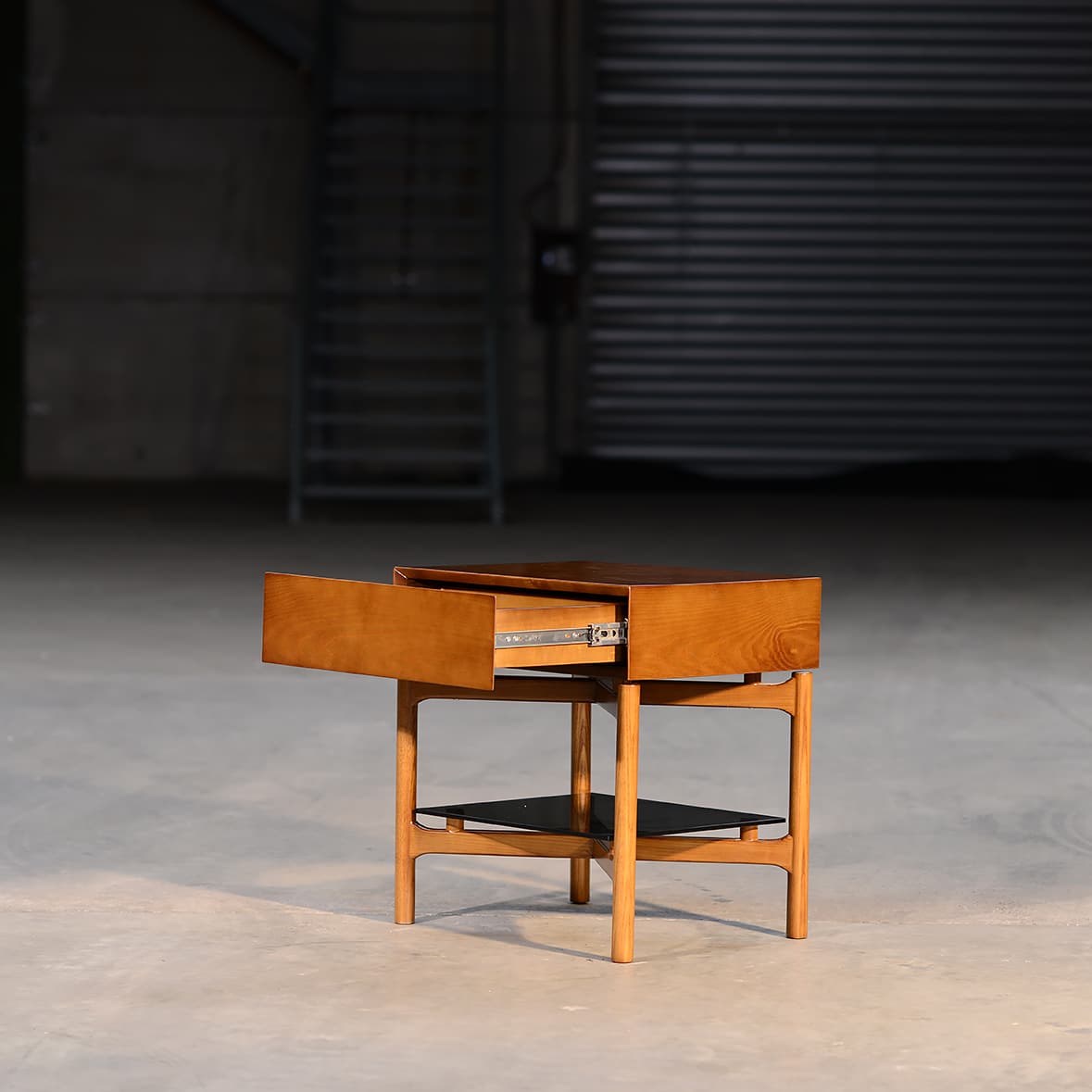
How to identify furniture wood? Humans are naturally drawn to materials close to nature, and solid wood timber for making furniture is no exception. Solid wood furniture is highly functional and expressive and can be used alone for structural support or made into a variety of items such as flooring, dining tables, and outdoor furniture.
However, recognizing wood species is not simple; some woods look very similar, especially when the wood has been processed, making it difficult even for experienced woodworkers to identify them. This article will tell you how to identify furniture wood.
Furniture Wood Classification
Wood for furniture is generally divided into two categories: hardwoods and softwoods. Hardwoods are not necessarily hard materials (denser) and softwoods are not necessarily fluffy materials (less dense).
The difference between hardwoods and softwoods has to do with vegetative reproduction. Hardwood trees are angiosperms, which are plants that produce seeds with some kind of envelope. Softwoods are gymnosperms. The seeds of these plants do not have an envelope and fall directly to the ground. Typically, hardwoods are deciduous trees and softwoods are evergreen trees.
Hardwoods include cherry, oak, elm, birch, beech, etc. They are usually more expensive but of excellent quality compared to softwoods. Softwood, including beech, nanmu, camphor, pine, fir, etc., a wide variety of prices can be accepted by most people.
Tips: generally, for wardrobe, bed, dining table, and other furniture, if you want a cost-effective one, then you can choose softwood as raw materials.
Understanding Pure Solid Wood and Imitation Types
Solid wood furniture can be roughly divided into two categories, one is pure solid wood furniture, that is, all the materials used in the furniture are solid wood, and the other is imitation of solid wood furniture, which mainly refers to furniture made of a mixture of solid wood and artificial boards.
Of course, real solid wood furniture is the first choice, that is, the material has not been processed again, without the use of any artificial board made of furniture. The following is a detailed introduction to the various common types of furniture wood, to answer the buyer’s questions about which wood is good for solid wood furniture, and to help buyers know how to identify furniture wood and how to argue in the purchase.
Pine Wood
A coniferous plant, generally there are two kinds: namely, horsetail pine and camphor pine, of which camphor pine is an important raw material for man-made fiberboard.
Pine has a delicious smell of pine with soft texture, which is the cheapest material in solid wood furniture and is widely used in mid-range solid wood furniture. Many log furniture and children’s furniture are made of pine, while dining tables and chairs are not, because the life span of pine is not long and suitable for consumable furniture.
The advantages of pine wood are low price, natural environmental friendliness, resistance to deformation, clear and beautiful grain, strong elasticity and breathability, good thermal conductivity, and simple maintenance. However, its disadvantages are also evident. Pine wood is soft and prone to cracking, not resistant to bumps, and cannot bear too much weight.
Oak
Oak primarily comes from North America and Europe and is divided into white oak and red oak—despite their names, red oak isn’t red, and white oak isn’t white, so you can’t rely on color for identification. Because oak is relatively scarce, furniture made from it tends to be more expensive. Additionally, some unscrupulous sellers use rubber wood from Southeast Asia, passing it off as oak, so consumers should be vigilant when making purchases.
Advantages: Oak features distinct, wavy grain patterns and is known for its durability, resulting in sturdy products that last a long time. Its surface has a pleasing texture, making it ideal for European-style furniture. For those looking to invest in high-quality, long-lasting pieces, the Oak Furniture Collection offers a range of elegant designs to suit any home.
Disadvantages: Quality oak species are limited, leading to a common practice of substituting rubber wood for oak. Moreover, if not crafted carefully, oak furniture may warp or crack over time.
Walnut
Compared with other genera, the boundary between heartwood and sapwood is particularly distinct in walnut wood. The sapwood is white to light, yellow-brown to light, chestnut brown; the heartwood is reddish-brown to chestnut brown, rarely with a tinge of purple and dark streaks.
If it remains exposed to air for some time, it turns chocolate color and distinct growth rings. South American black walnut, American black walnut, and European black walnut are varieties of this timber, which is sourced from North America, and Northern Europe, and the American type is the best.
Advantages: Black walnut has a smooth complexion with a general dark brown and slight purple hue; its grain patterning is rather attractive. When finished to a high shine, it delivers an extremely high degree of surface durability against impacts, wearing, and corrosion. Also, it provides fair dimensional stability, as the shrinkage rate is low and thus the pattern adapts easily to any climate.
Disadvantages: Black walnut is typically a slow-growing wood that needs proper care, lest it develops drying and aging problems.
Conclusion
After reading this article, you may know more about how to identify furniture wood. When placing the material of furniture, it’s important to have a basic understanding of the types of wood used. Different species of wood vary in density and weight. By touching and lifting the furniture, you can get a general sense of its density and weight, which can help you further determine the type of wood.
Each type of wood has its distinctive scent. For instance, pine has a light, resinous aroma, while oak has a stronger, more pronounced woody smell. When buying furniture, consider getting close and taking a sniff; the scent can be a useful clue in identifying the type of wood.
