

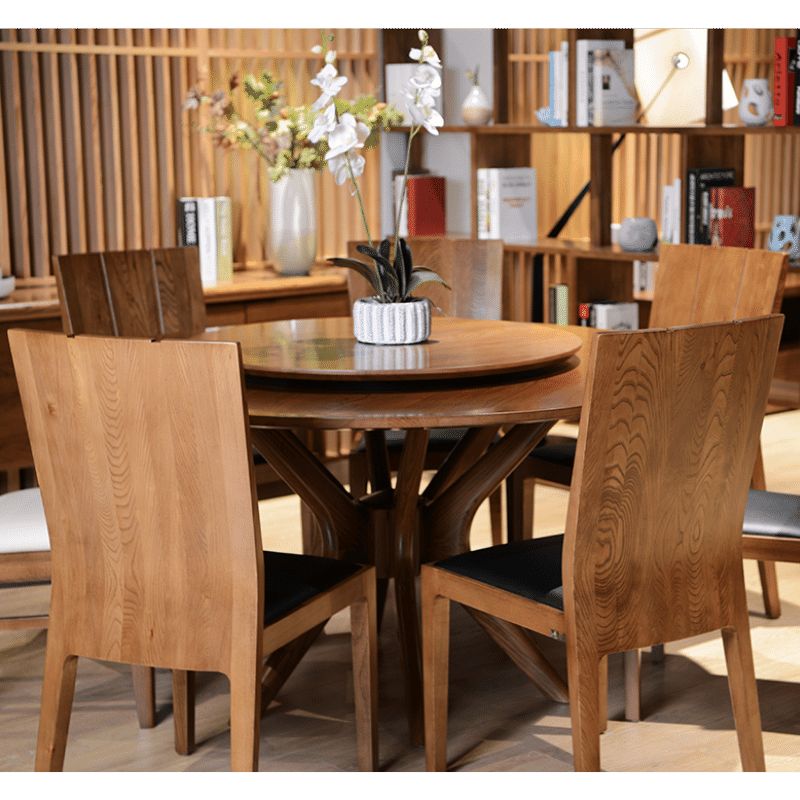
A conventional dining table is commonly 29 to 30 inches high, or about 737 to 762 mm, in this furniture-design reference. That is a design range, not a measured market average. When comparing the average height of a dining room table with a particular stone or timber model, use it only to orient the search. The finished design, including its base and supports, determines the actual tabletop height.
A comparison of stone and timber dining tables matters when a client wants to change the surface while keeping the rest of a room. The comparison needs to establish what actually changes in the selected products. Assuming that one material is thicker, taller, or more restrictive can send the specification in the wrong direction before the drawings have been checked.
Compare finished heights before explaining the difference
A product’s overall height runs from the floor to the tabletop’s upper surface. That dimension includes the complete assembled structure. Two designs can use different top materials and still finish at the same height because their bases and support details differ. The material name alone is insufficient evidence for a dimensional conclusion.
Visual thickness can be misleading too. A photograph may show an edge profile without revealing the construction behind it. Ask what the published top measurement represents and whether additional support sits underneath. The buyer needs the actual section through the assembly, especially near the places where diners will sit.
For an initial comparison, enter the published finished height without making any allowance for material. Do not add an assumed slab thickness to a number that already describes the complete table. That would count part of the construction twice. If the listing is unclear, have the supplier confirm the dimension before it enters the approved schedule.
Group products by their intended use. Conventional dining tables should be compared with other dining tables before broader conclusions are drawn. Including a counter-height design because it has a similar finish would introduce a change in furniture category, making the material comparison difficult to interpret.
A matched-height example challenges the material assumption
Use a hypothetical specification exercise to separate material from height. A timber-topped design is listed at 750 mm high, with a footprint of 1,800 by 1,000 mm. These assumed dimensions establish the comparison’s starting point. They are not measurements of a particular retailer’s product and should not be copied into an order.
A second assumed design has a stone surface and also finishes at 750 mm, with a footprint of 1,800 by 900 mm. The two tables have equal overall heights but different widths. Nothing in those numbers establishes equal underside clearance, identical bases, or equivalent seating capacity. Each of those features needs a separate entry in the comparison.
Now suppose a third design finishes at 770 mm and uses a round stone top. The additional 20 mm describes a difference between these assumed assemblies; it cannot establish that stone creates taller tables. The supporting structure and complete construction would need to be examined before explaining the difference.
The same method applies when a client picks a finish before a model. A preference for the Teso Dining Table Stone Top at Oak Furniture Collection tells you which surface to investigate; it does not establish how its height compares with other dining tables. Put the selected Teso specification beside the alternative already in the brief. Explain any difference through those two assemblies, and keep missing underside dimensions on the supplier query list. The resulting recommendation will concern the actual substitution rather than an assumed rule about stone.
Inspect the supporting structure where people sit
Once finished heights have been compared, examine the underside. Request the lowest obstruction at the intended seating positions and a drawing of the supports. A timber apron, metal plate, or other structural element may sit below the visible top. Its location matters more to legroom than a general description of the surface material.
Imagine two hypothetical tables that both finish at 750 mm. One has an unobstructed underside at 700 mm; the other’s frame reaches down to 640 mm near a seat. Their headline height matches, but the obstruction levels differ by 60 mm. Those assumed dimensions illustrate what an overall-height comparison leaves unresolved.
Check the end positions as well as the long sides. Supports may be arranged differently around the perimeter, particularly when comparing a rectangular model with a round one. Avoid writing a single clearance figure into the schedule unless it accurately describes every seating position being approved.
Match those observations to the selected dining chairs. Keep seat and armrest measurements separate, and test any position close to a support. The aim is to discover a specific interference before purchase, rather than using the material category as a substitute for a fit check.
Describe the substitution in terms the buyer can verify
Summarize the comparison as actual changes between named products. List the finished height, footprint, and confirmed underside differences. Identify unresolved dimensions explicitly. This gives the client a factual account of what the substitution does to the room without claiming that stone or timber has a universal dimensional advantage.
Keep care and delivery questions separate from the height decision. Ask about the selected surface’s maintenance instructions and the handling or assembly requirements of that product. A matching height does not establish equal weight, interchangeable parts, or identical installation needs. Those details require their own supplier confirmation.
When reviewing a stone top dining table, retain the exact model in the recommendation. Approval belongs to the product whose dimensions have been checked, including the selected size and construction details. A later substitution should reopen the relevant comparisons.
The finished selection should answer a straightforward question: can this particular table replace the proposed timber or stone model without compromising the agreed arrangement? Confirmed dimensions and an underside check can answer it. The average height of a dining room table cannot resolve a difference between two specific assemblies.
