

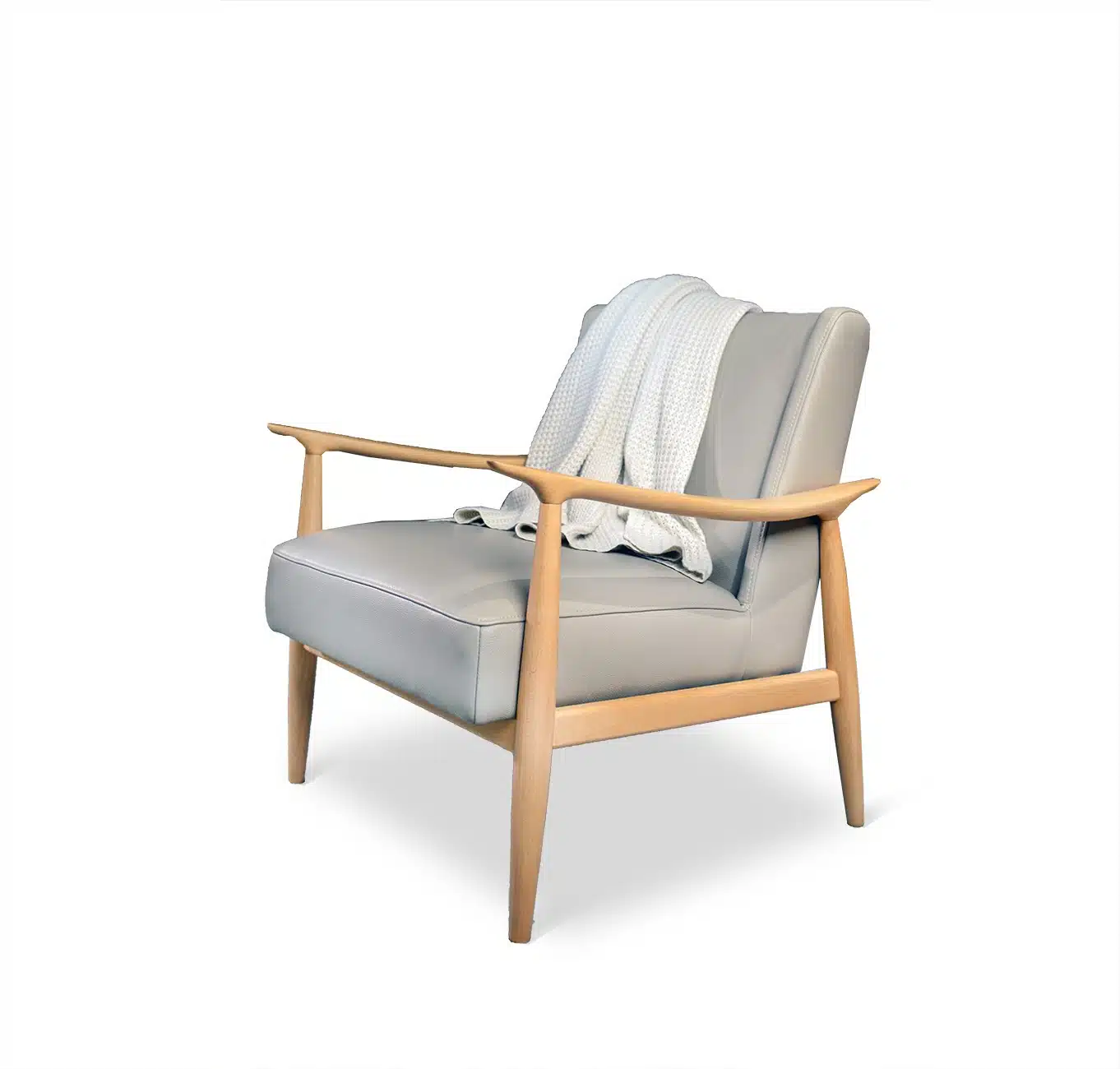
Natural leather, a timeless material, has been used for centuries to craft furniture, fashion accessories, car interiors, and a range of luxury items due to its elegance, durability, and distinctive ageing properties. Even as the raw materials reach has expanded, leather remains a go-to for stylish yet practical pieces that conjure a certain warmth and presence, a fact that might come as a surprise in a time when different types of leather exist, from plastics to more environmentally friendly materials.
Full-Grain Leather: The Pinnacle of Quality and Authenticity
The highest quality leather available is known as full-grain leather. It comes from the top layer of the hide and is left unaltered except for the most necessary of manufacturing changes. Because it is such a close representation of the animal skin, anyone who has seen, touched, or worked with full-grain leather knows that it has an authenticity and natural beauty unlike any other material.
This type of leather retains all the original markings and imperfections that the animal skin had before it was tanned and made into leather. Those attracted to such natural beauty may well prefer full-grain to any other leather. While full-grain leather might look like other types at first glance, it’s in a league of its own when it comes to quality and durability.
Top-Grain Leather: A Fine Balance of Smoothness and Strength
Though full-grain leather remains untouched, top-grain leather undergoes light processing, where the top layer is sanded and buffed to remove imperfections. This results in a smoother, more uniform surface. Because of this, top-grain leather is a favourite among consumers who want something that looks sleek and polished.
However, they don’t want it to be noticeably weaker or less durable than full-grain leather. All in all, if you want something that looks good and isn’t going to fall apart, you might consider top-grain leather. Though not as durable as full-grain leather, it is nonetheless tougher than different types of leather, and much more so than most synthetics.
Moreover, if you want something easy to care for, top-grain leather is smarter than full-grain leather (or practically any other fabric) in that regard.
Split Leather and Genuine Leather: Affordable Yet Functional Options
The lower layers of the hide are used to make split leather. After the top grain is separated, the rest of the hide is processed into split leather. It lacks the strength and texture of top-grain leather, but what it provides is a cost-effective opportunity to get the look and feel of leather in a wide range of products.
You can often find it embossed or finished to resemble more premium leathers, like aniline or semi-aniline, in everything from book bindings to furniture. Because of its strength and durability, bookbinding has long made use of split leather.
Bonded Leather: Economical But Limited in Longevity
Composite leather is made up of leftover leather scraps that are ground and bonded together using a mixture of adhesives and polyurethane coatings. This yields a leather substitute that looks somewhat like the real deal, but lacks any serious resemblance when it comes to durability or shut-up-and-take-my-money kind of cool-factor. Bonded leather, as a composite material, is pretty much the worst among different types of leather in almost every way that leather can reasonably be expected to perform.
Nubuck and Suede: Softness and Texture for Refined Applications
Nubuck and suede are both types of leather that emphasise softness and texture, though they differ in terms of finish and durability. Nubuck is made by lightly sanding the surface of full-grain leather to produce a soft, velvety texture that is elegant yet more resistant to wear than suede. This makes it a popular choice for upscale furniture and fashion items.
Suede, on the other hand, is produced from the inner layer of the hide and offers a similarly soft finish but with less structural integrity and greater vulnerability to stains and moisture. Both types require careful maintenance and are best suited for accent pieces or occasional-use furniture. Their rich texture adds sophistication to any room designed with complementary materials such as walnut wood or brushed metals.
Exotic and Speciality Leathers: Luxury Beyond the Norm
Besides traditional cowhide leather, a vast range of exotic leathers—from crocodile to lambskin—is available to luxury buyers seeking something unique. These leathers all come with distinct patterns, colours, and textures that can elevate any product to a statement piece.
For instance, lambskin is soft and used in high-end apparel and accessories, whereas crocodile leather adds bold texture and pizzazz to decorative items and makes for great premium furniture accents. While you are not likely to find these speciality materials in mass-market furniture, they do show up in bespoke collections and custom jobs.
Choosing the Right Leather for Furniture Applications
Choosing leather for furniture isn’t just about looks—it’s about finding a material that can handle your family’s daily life while staying beautiful for years. For heavy-use pieces, full-grain leather is the undisputed champion for durability, while top-grain leather offers excellent performance with easier maintenance—sometimes even better suited to certain homes.
For occasional furniture or low-traffic areas, suede and nubuck add wonderful texture, though they won’t stand heavy wear. On the budget end, split leather and bonded leather give you the leather look at lower price points—what we call “high-low” solutions, where you balance cost with quality.
Recommendation
Anyone looking for elegant, high-quality furniture can turn to OAK Furniture Collection with confidence. Our collection is a marvel of impressive craftsmanship, which highlights the beauty of both leather and wood. If you want to fill your space with pieces that have guaranteed long-term appeal and are built to last, look no further than the OAK Furniture Collection.
