


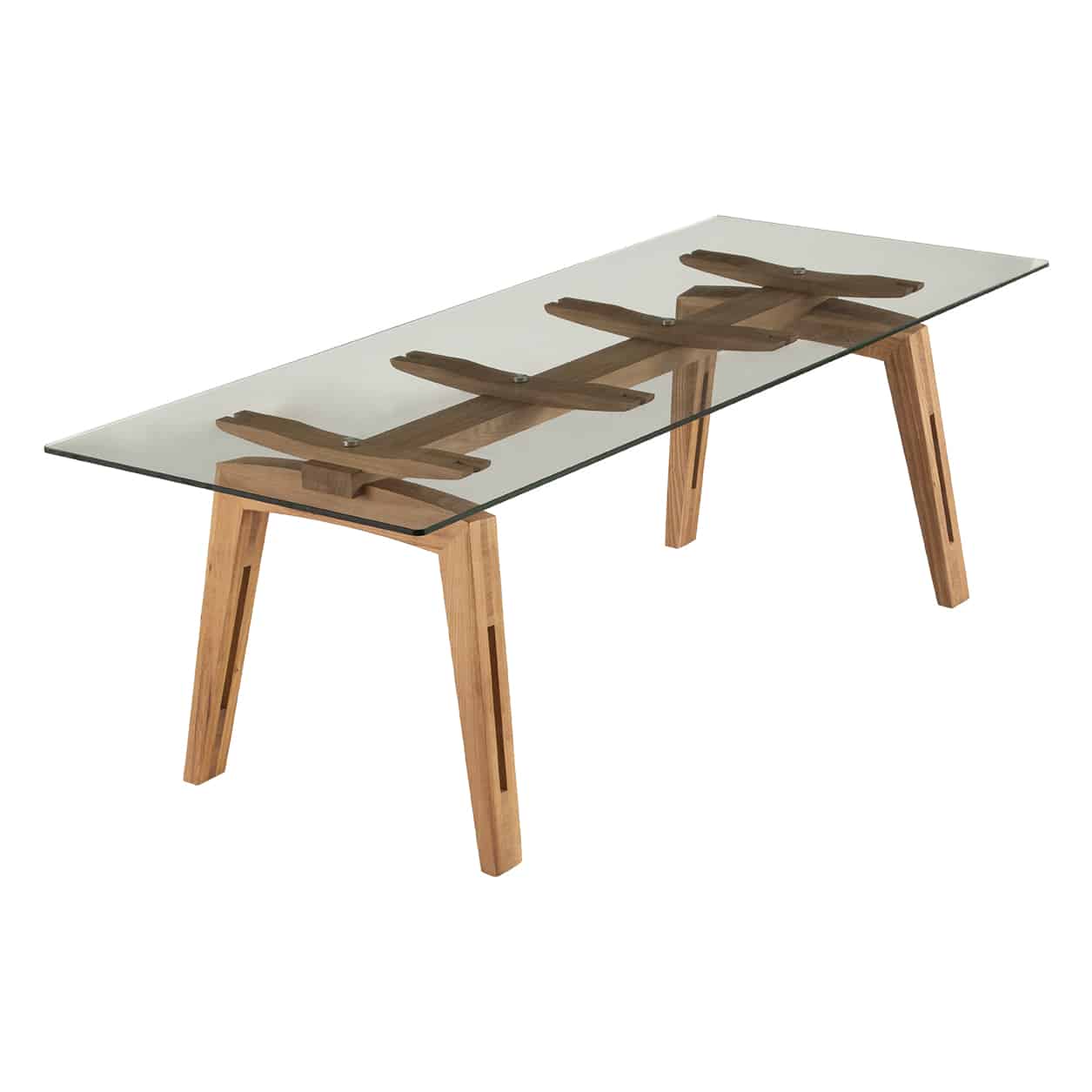
Is ash wood good for furniture? Ash wood is a dicotyledonous tree with a hailing similarity to European ash, which is native to sections of North America and Europe. A typical Eucalyptus Habitat can grow up to 30-40m in height with a trunk diameter of 1.5m at about 80 years if the environmental condition is suitable. Ash has high soil requirements, but may also grow in forested grasslands on grey, degraded black, and alluvial river valley soils.
The cut ash wood available in the market most of the time originates from North America. This region has great potential for ash growth because their forest vegetation is lush and the climate is suitable together with the type of soil they need. Furthermore, grading regulations of exported North American ash wood are adherent to the NHLA certification that directs that processing of ash wood must also follow a standard process recognized by NHLA.
Why Is Ash Wood Considered the Best Value in North America?
Stunning Aesthetics
Ash wood has a lovely appearance especially the screwed grain pattern which is clear and dramatic. Due to the large distances between the grain lines, scallop-formed patterns are accurate and deep. In comparison with other furniture wood, white oak, and ash have a light creamy white as the background, but the grain stands out far more sharply and gives more contrast.
The wood of ash is light, according to some accounts almost white, at least the sapwood, which is sometimes pinkish; the heartwood is comparatively uniform in color, varying from a light to a dark brown. All in all, ash is a lighter-colored wood, which works well with most design types and is therefore conservative as a furniture wood.
Furthermore, ash wood is very smooth when it is turned into utensils, so even, when used during the cold period of the year, it does not have a cold feeling, which makes it suitable for use in houses of the regions with relatively cold environments.
High Performance of Ash Wood
Ash wood is especially valuable since its air-dried density is 0.66, therefore, it does not warp, shrink, bend, or twist due to its capacity to endure fierce conditions. In arid conditions, its aging feature is quite negligible and the density of the core seems to be stable. These characteristics make ash wood furniture scratch-resistant, hard-wearing, and stable.
High Quality of Ash Wood
North American ash wood has been sourced and conforms to the highest possible NHLA standards. By these standards, the moisture content in kiln-dried ash wood varies from 8 percent to 12 percent, which raised a classy feel to work on the wood and finish and polish it most elegantly.
Moreover, the price is more reasonable than that of North American black walnut. Hence the key question, Is ash wood good for furniture? Indeed, it is a superb product because of its high performance and the quality of material used in the production of these doors, so it is preferred to be installed in homes.
Principal Distinctions of Ash Wood and Black Walnut
Price: Black walnut costs much more than ash wood with a market price of about 20,000 yuan per cubic meter. As a result, furniture made of black walnut, this type of strong wood, is more costly compared to other types of wood.
Processing Performance: Ash wood can be stained and polished to get a good finish. It is ideal for high-end furniture for Americans, flooring, solid wood hat and coat ranks, and interior architecture decoration and usually cheaper than the black walnut.
However, ash wood has a coarse grain, which is moderately better for paint and adhesion but tends to change colors anytime. However, black walnut is a high-impact and abrasion-resistant hardwood although it seems to be decay-resistant, easy to dry, and deform little. This wood type is very accessible for use as well as easy to develop rapport with and is superior in oil absorption for finishes compared with other woods.
Cracking Performance: Ash wood has a very good drying capacity and it takes quite a lot of time to dry and represents moderate shrinkage. Shrinkage coefficients are equal to 0.17% tangent and 0.31% radial shrinkage; therefore, the material is prone to cracking with high rates of drying. Black walnut on the other hand does not crack easily owing to its low rate of shrinkage, thus it can easily adjust to the changing climatic factor.
Color and Appearance: Ash wood is very similar to European ash hardwood with heartwood colored from light brown to dark brown, and has an open grain with a coarse texture. It is mainly applied on utensils such as chairs, tables, floors, moldings, fancy furniture, exquisite wooden products, sports, and handles of various tools.
Black walnut on the other hand has a nice, smooth cutting surface with a sort of satiny-like sheen that is a light blackish-brown with hints of purple. Its grain has parabolic patterns, at times wavy curls, bird peck small marks, and other pretty decorative patterns.
So, is ash wood good for furniture? Yes, it offers a fantastic balance of aesthetics, performance, and value, making it a great choice for various applications. For those looking for exceptional craftsmanship, the Oak Furniture Collection offers superior quality and timeless elegance, ideal for elevating any interior space.
Conclusion
Ash wood stands out for its exceptional cost-performance ratio among high-end hardwoods. Its versatile color palette makes it suitable for various styles, whether it’s new Chinese, Japanese rustic, Scandinavian minimalist, or modern designs. This adaptability makes it easier to integrate into personalized home decor. Given its qualities, one might wonder: is ash wood good for furniture? The answer is a resounding yes—it complements a wide range of interior design aesthetics, enhancing any space beautifully.
