

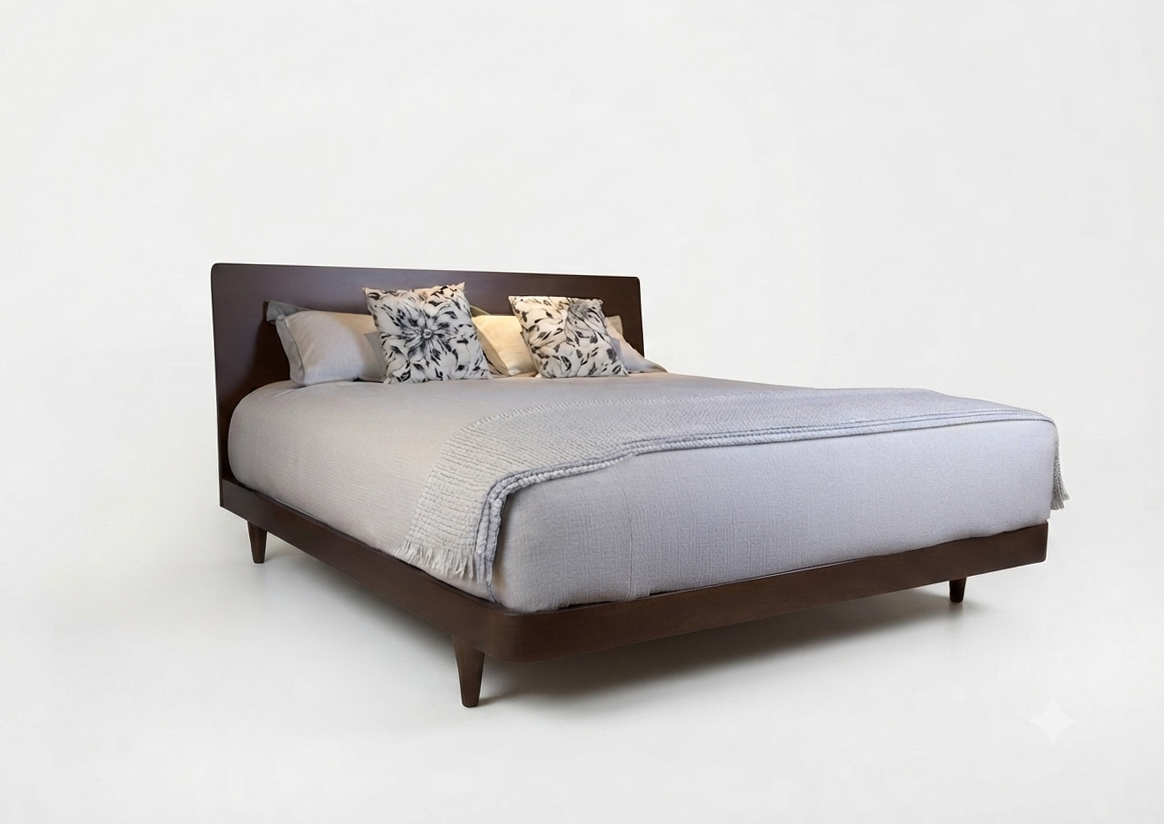
Selling mattresses teaches you two things. The first is that every back is different. The second is that the marketing is almost always louder than the information. After years in the trade and countless showroom conversations about shoulders and lower backs, we have boiled the mattress buying guide down to six decisions.
Order matters. Make these calls in the right sequence and you will walk out with something you will still be happy sleeping on in a decade.
Sleep position comes first
Side sleepers need pressure relief at the shoulder and hip, which means a medium soft to medium mattress that lets those points sink in while the spine stays straight. Back sleepers do best on medium, with enough contour to fill the lumbar curve but not so soft that the hips drop. Stomach sleepers should go firmer, otherwise the pelvis sinks and the spine ends up in a shallow smile.
Body weight changes the equation too. A lighter person finds the same mattress firmer than a heavier one does, so a sixty kilogram side sleeper and a ninety kilogram side sleeper rarely land on the same model. Couples should keep that in mind when they shop together, because the compromise is rarely the middle of the two.
The four material families
Four families cover almost everything on the market. Pocket spring mattresses offer support, airflow and a bit of bounce, which is the traditional Australian favourite. Memory foam contours closely and isolates movement beautifully, at the cost of sleeping warm for some people. Latex is the premium outlier: responsive, cool and very durable, but it asks for a serious budget. Hybrids stack springs with foam or latex layers, which is why so many of today’s top-end beds are hybrids.
Ignore the invented product categories and focus on construction. Two mattresses labelled premium hybrid can be wildly different once you check what is actually inside.
What spring numbers really tell you
Spring counts make great marketing and mediocre science. In our experience, a double size mattress with around 1,500 to 2,000 pocket springs is a sensible combination of support and price, and a king that jumps above 3,000 springs is usually a premium product. Between those two figures, most households land closer to the lower number. But the number that matters more is density, meaning how many springs sit in each square metre. High-end mattresses typically run 400 to 600 springs per square metre, and that density is what gives zoned support that responds to different parts of the body.
Spring gauge matters just as much. Heavier wire, roughly 1.4 to 1.8 millimetres, gives firmer, more durable support. Finer wire around 1.2 to 1.4 millimetres responds more softly, which side sleepers often prefer. For foam, the equivalent question is density: a high-density base foam will hold its shape years longer than a soft, cheap one.
Matching the mattress to the frame
A mattress and a frame have to agree before they can help you. Slatted bases are great for pocket springs, but if you are buying foam, keep the slat gaps to about eight centimetres or less, or the foam will sag into the gaps. Solid platform bases suit almost everything. If you are putting a new mattress on an old base, ask whether the frame still supports evenly, because a tired base can ruin a good mattress within a year.
Check the weight too. It sounds trivial, but we have had customers who struggled to lift their new mattress while changing sheets, and one who had to call in a neighbour. If you have back problems or you are not as strong as you used to be, ask about the mattress’s weight before you commit. The best mattress in the world is a burden if you cannot turn it.
How to test one properly
The showroom test takes longer than people think. Lie down for ten to fifteen minutes in the position you actually sleep in, not the one that looks good. Bring your own pillow. If you share the bed, bring your partner and test at the same time. Sit on the edge for a moment as well, because that is where many mattresses let you down, and edge support matters every time you get in and out of bed.
Ask what happens after delivery. A mattress cannot be judged in sixty seconds, which is why trials exist, and why a written answer to the question “what happens if it does not suit me?” is worth more than any showroom promise.
Fine print that deserves attention
A good mattress comes with a long warranty, and ten to fifteen years is common on quality models. But the fine print is where people get stung. Look for the sagging threshold, usually measured as a visible depression of a certain depth. Check what voids the warranty, because stains and the wrong base are the classic culprits. And note whether the warranty applies to the original buyer only. Transferable warranties are rare and worth asking about, because a mattress often outlives its first owner’s address.
Take the same attitude to the trial period as you would to a road test. Sleep on it for the full trial, keep the paperwork, and do not be shy about exercising the return policy if your back complains. A mattress is the one purchase where the fine print matters as much as the foam, which is why, at Oak Furniture Collection, we would rather you ask the awkward questions in the showroom than discover the answers at 2 a.m. The Sleep Foundation (sleepfoundation.org) publishes thorough, independent mattress guidance, and Consumer Reports (consumerreports.org) has run its own long-term mattress tests for decades.
